
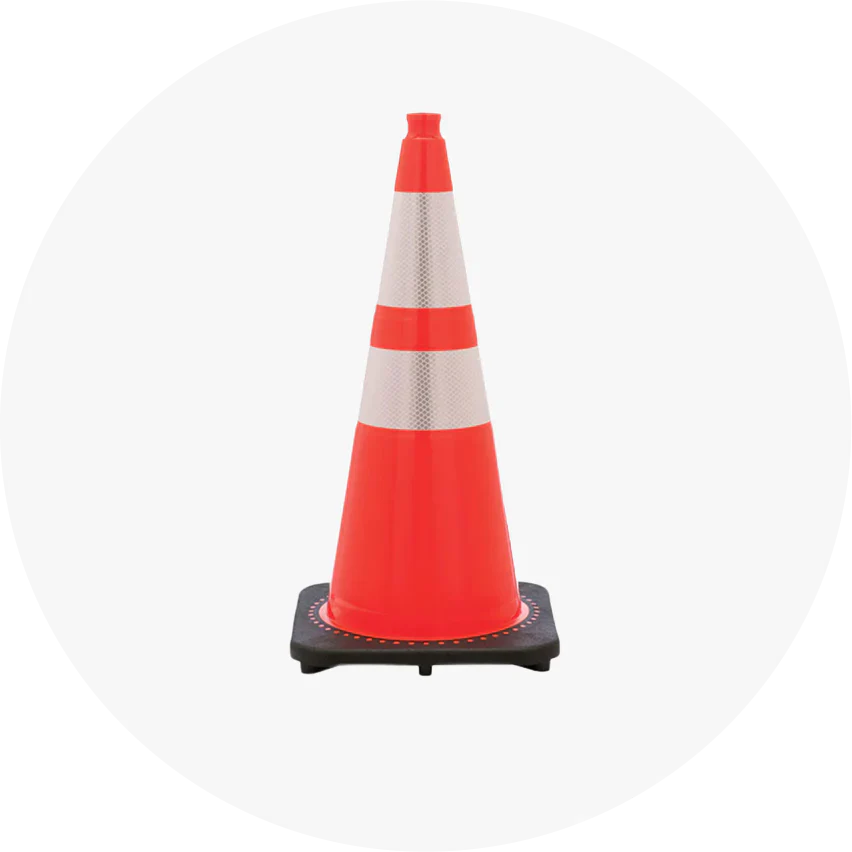







Traffic cones are your best partners to guarantee the safety of the vicinity around your buildings, projects, and on the road. It’s what they are designed to do. However, it is inevitable for those who are not knowledgeable to misuse these cones. Let’s embark on a journey across the various traffic cone safety purposes, and the proper use of traffic cones with traffic cone misuse examples.
The Unparalleled Design of Traffic Cones: A Primer
These traffic cones feature a tapered, conical shape engineered for maximum visibility and stability. Their bright fluorescent colors, typically orange with reflective collars, ensure they stand out in low light and adverse weather. The wide, weighted base keeps them upright against wind, passing vehicles, and minor impacts.
Made from flexible and durable materials, traffic cones absorb shocks without cracking. This durability allows them to bend under pressure and return to shape. This design also makes their storage and transport efficient.
Every curve serves a purpose. From the narrow top for easy handling to the broad base for balance, traffic cones combine simplicity and smart engineering to enhance roadway safety and traffic control.
Take note of the magic words there: reflective collars, weighted base, and the material. Let’s take a closer look.
Traffic Cone Design: A Closer Look
Now that you’ve gotten a glimpse of the design of these traffic cones, let’s get you into a deeper perspective on the features that make up the best traffic cones – taking the cue from this store, Safety Supplies USA.
Injection Mold PVC
PVC, or polyvinyl chloride, is a durable plastic used in injection molding to create strong, flexible, weather-resistant cone bodies that withstand impacts and maintain shape for long-lasting traffic control.
Heavy-Duty Base
A heavy-duty base lowers the cone’s center of gravity for stability, while a cleated base grips pavement, preventing tipping or sliding during wind, traffic, or construction activity for safer work zones.
High-Intensity Retroreflective Collars
These collars efficiently reflect vehicle headlights at night and in low visibility, dramatically improving cone visibility and alerting drivers to hazards, lane changes, or work zones from greater distances.
Weather Resistance With UV Stabilizers
UV stabilizers protect cones from sun-induced fading and material breakdown. Weather resistance ensures performance in heat, cold, rain, and snow without cracking, warping, or losing color.
Top Grabber Design
A top grabber makes lifting and placing cones easy and ergonomic. It speeds setup and removal, improves handling safety for workers, and allows quick repositioning during traffic management.
Those constitute what traffic cones are designed to do. Let’s head over to the common misuses of these traffic cones, with traffic cone misuse examples.

Common Misuses of Traffic Cones
What are these common mistakes?
1. Selecting the Wrong Size or Type
Think about this like this: for projects with bigger scope, smaller traffic cones won’t work. First things first, traffic cone sizes must be the same for a single type of use. Aesthetically-speaking also, when traffic cones differ in size on an expressway, it will always look awkward. For instance, in expressways, larger traffic cones must be in place. For urban sidewalk repair, smaller cones will do.
How to Avoid: Assess roadway conditions and choose correct cone size and material for specific applications.
2. Incorrect Spacing Between Traffic Cones
In installing traffic cones, the spacing must be properly adjusted according to the road speed, and actual usage intentions. Too dense spaces or too sparse spaces are unacceptable. For example, less than five meters on expressway sections, or more than 20 meters on urban roads.
How to Avoid: Follow official spacing guidelines to maintain clear, consistent traffic flow and driver understanding.
3. Installing Traffic Cones Without Reflection When Necessary
Even some stores like Safety Supplies USA won’t readily feature traffic cones with reflection or retroreflective sheets. They are generally used for daytime undertakings. However, low-visibility scenarios, like nighttime projects definitely need these retroreflective sheeting.
How to Avoid: Use high-visibility reflective collars in low-light, nighttime, or poor weather conditions.
4. Ignoring Their Weight and Stability
In scenarios like windy weather, frequent borderline driving of vehicles, or high-speed sections, traffic cones that are too light are not recommended. The safety of these traffic cones determine the sustainability of their warning functions.
How to Avoid: Select cones with weighted or cleated bases for stability in high-traffic areas.
5. Not Complying With Standards
Ordering traffic cones that are not certified is like ordering a random food from food shops that are known for unsafe practices. Ignoring these safety standards is like ignoring their very purpose. Every traffic cone from Safety Supplies USA adhere to the highest standards in the industry.
How to Avoid: Ensure cones meet local and federal safety regulations before deployment.
6. Looking at Traffic Cones as the Sole Way for Traffic Control
A common mistake that several of you may find themselves into. There are two sides to the coin here. First, traffic cones are not the only way for traffic control. Human intervention and proper policies are still necessary. Subsequently, traffic cones are also not mere accessories. Relying solely on traffic cones also undermines the safety on the road and others.
How to Avoid: Combine cones with signage, barriers, and lighting for comprehensive traffic management.
7. Excessive Crowding That Causes Interference
Excessive crowding creates visual interference by overwhelming drivers with too many markers, blurring lane guidance, and hazard focus. Cluttered cone patterns reduce clarity, slow reaction times, and increase confusion.
How to Avoid: Space cones evenly to prevent visual interference and driver confusion.
8. Lack of Regular Maintenance and Cleaning
Dirty, faded, or damaged cones reduce visibility and credibility. Without routine cleaning and inspection, reflective collars lose effectiveness, cracks worsen, and cones fail to communicate hazards clearly in critical situations.
How to Avoid: Schedule routine inspections, cleaning, and replacements to maintain maximum visibility.
9. Incorrectly Installing Traffic Cone Accessories
Improperly attaching accessories like cone lights and brackets can cause imbalance, reduced visibility, or detachment. Misaligned lights diminish nighttime warning power, while loose brackets create safety risks.
How to Avoid: Attach lights and brackets securely following manufacturer installation guidelines.
10. Ignoring Pedestrian Safety Details
Failing to consider pedestrian paths alongside motorists creates confusion and danger. Cones must clearly separate walkways from vehicle lanes, ensuring safe navigation for both foot traffic and drivers.
How to Avoid: Design clear pedestrian pathways separated safely from moving vehicles.
Together, Let’s Prevent These Misuses From Manifesting
By understanding the true purpose of traffic cones and avoiding common misuses, you could create safer work zones, clearer guidance, and better protection for crews, drivers, and pedestrians each day.