
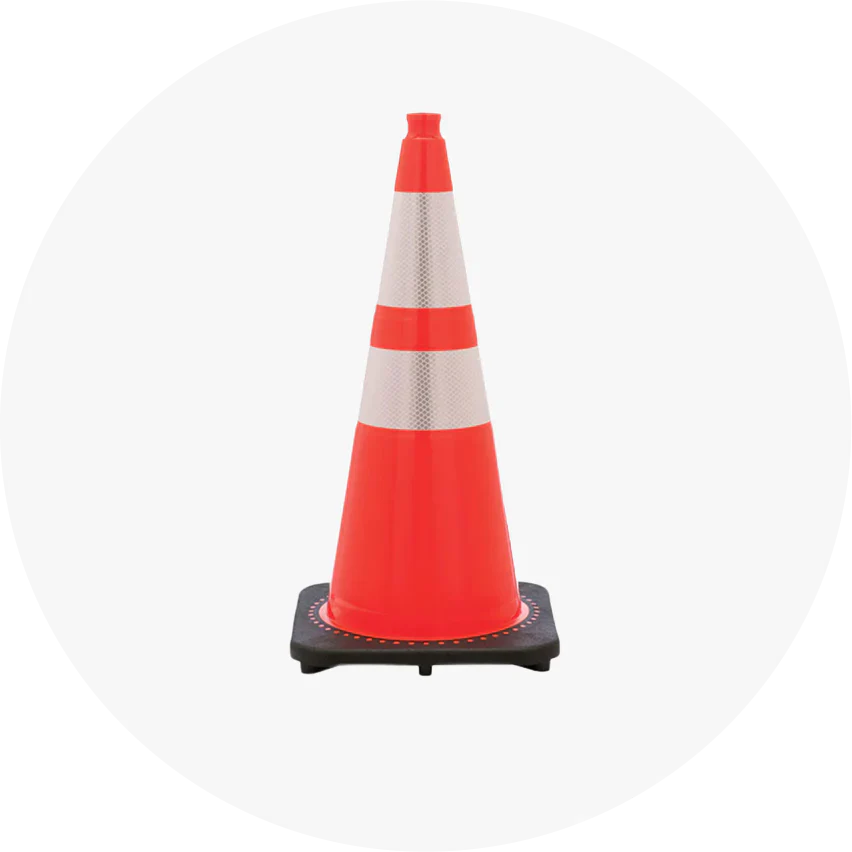







When you’re buying traffic cones for construction zones, parking lots, event management, or road safety, you’ll likely compare two popular options: injection-molded PVC traffic cones and traditional rubber cones. Both are widely used and can be MUTCD-compliant when properly marked, but they perform differently depending on the environment and purpose. Understanding these differences ensures you get the best value – and the safest equipment – for your needs.
This guide breaks down how injection-molded PVC traffic cones stack up against rubber cones in durability, flexibility, visibility, cost, and long-term performance. Let’s dive right in!
What Are Injection-Molded PVC Traffic Cones?
Injection-molded PVC traffic cones are made from flexible polyvinyl chloride using a single-piece molding process. Because the cone and base are fused together, there are no weak points, seams, or attachments that could separate over time. This makes them reliable and consistent in shape and performance.
Their key characteristics are:
-
Unified design for durability
-
Highly flexible and impact-resistant
-
Bright, vivid color for strong daytime visibility
-
Lightweight and easy to transport
-
More affordable than rubber cones
These cones are especially popular in temporary traffic control, school zones, drive-through operations, parking management, and municipal activities where portability matters.
How About Rubber Traffic Cones?
On the other hand, rubber cones are made from heavy, molded rubber – often recycled – making them denser and more stable than plastic alternatives. They are engineered for long-term, rugged environments and high-speed traffic zones.
Their key attributes are:
-
Heavier weight for superior stability
-
Excellent durability under extreme weather
-
High resistance to tipping or sliding
-
Minimal fading from sun exposure
Rubber cones are preferred in highways, industrial facilities, airport runways, and areas exposed to vehicle wind drafts and constant traffic.

PVC Traffic Cones vs. Rubber Cones: Head-to-Head Comparison
This time, let’s put each category to the test to see which pars better than the other:
1. Durability
Injection-molded PVC traffic cones offer long-lasting durability thanks to their one-piece construction, which prevents separation and reduces weak points. Their flexible PVC material absorbs impact and quickly returns to shape, resisting cracks and dents. Rubber cones are sturdy but can chip, deform, or become misshapen over time. PVC’s resilience in everyday conditions makes it the superior long-term option.
2. Stability
Injection-molded PVC traffic cones now feature improved weight distribution and balanced bases that help them stay upright in most work environments without becoming overly heavy. Their flexibility also allows them to recover easily if knocked over. Rubber cones are heavier but don’t always regain shape once tipped. PVC provides the ideal combination of stability, recovery, and usability for daily operations.
3. Flexibility
Injection-molded PVC traffic cones excel in flexibility, bending under pressure and instantly returning to their original form. This prevents cracking and ensures the cone remains usable even after repeated impacts from vehicles or equipment. Rubber cones, while strong, don’t rebound as effectively and may retain dents or deformation. PVC’s superior flexibility significantly extends the cone’s lifespan and reliability.
4. Visibility
Injection-molded PVC traffic cones hold bright pigments exceptionally well, ensuring vibrant, high-visibility colors that stand out in both daylight and low-light conditions. Reflective collars also appear sharper on PVC surfaces, boosting nighttime visibility. Rubber cones tend to look darker and less vivid, reducing their effectiveness from a distance. PVC’s enhanced color clarity makes it the top choice for safety visibility.
5. Weight & Portability
Injection-molded PVC traffic cones are lightweight, making them easier for workers to carry, stack, and deploy throughout the day. Their reduced weight helps prevent fatigue during frequent relocations. Rubber cones, though stable, are significantly heavier and more difficult to transport, slowing down setup times. PVC offers the best balance of usability, mobility, and on-site efficiency across various job conditions.
6. Pricing
Injection-molded PVC traffic cones are more cost-effective both upfront and long-term. Their affordable pricing, combined with durability and flexible performance, makes them ideal for businesses purchasing in bulk. Rubber cones typically cost more and incur higher shipping expenses due to their weight. PVC delivers excellent value, allowing organizations to equip worksites safely without exceeding budget requirements.
What Do PVC Traffic Cones Have That Rubber Cones Don’t Have?
PVC traffic cones offer brighter, more vivid color visibility that rubber cones can’t match. Their material absorbs pigments better, making them easier to spot from long distances and in low-light conditions.
They’re also significantly more flexible. PVC cones bend on impact and spring back into shape, reducing breakage and extending their usable lifespan. Rubber cones tend to dent, warp, or stay misshapen.
Lastly, PVC cones are lighter and easier to transport, stack, and deploy, improving worker efficiency on busy job sites.

The Verdict: Which Is Better?
No doubt that injection-molded PVC traffic cones deliver superior visibility, flexibility, portability, and overall value, making them the more intelligent choice for most worksites and safety needs. Their lightweight yet durable design ensures long-lasting performance in any environment. Ready to equip your team? Explore high-quality PVC traffic cones at Safety Supplies USA right now!