






Table of Contents
- Are Traffic Cones Required by OSHA?
- What OSHA Says About Traffic Control Safety
- OSHA vs MUTCD Requirements
- Standard Traffic Cone Requirements
- Reflective Traffic Cone Rules
- Traffic Cone Spacing Requirements
- When Larger Traffic Cones Are Required
- Industries That Must Follow Traffic Cone Regulations
- Common OSHA Traffic Cone Violations
- How to Choose OSHA-Compliant Traffic Cones
- Where to Buy Reliable Traffic Cones
- FAQ
Are Traffic Cones Required by OSHA?
Traffic cones are not just optional safety tools. In many environments, they are essential for OSHA compliance and workplace safety.
OSHA requires employers to protect workers from traffic-related hazards and maintain safe work zones. While OSHA does not specify exact cone designs in every regulation, it references established traffic control standards that require proper use of traffic cones and other warning devices.
In practical terms, if workers are exposed to moving vehicles, pedestrians, or hazardous work zones, traffic cones are often necessary.
What OSHA Says About Traffic Control Safety
OSHA requires employers to create safe work environments wherever traffic hazards exist.
This applies to:
- Road construction
- Utility work
- Parking management
- Event traffic control
- Municipal operations
The goal is to clearly separate:
- Workers
- Vehicles
- Pedestrian traffic
- Hazard zones
Traffic cones help establish visual boundaries and guide movement safely.
OSHA also expects employers to use proper warning devices that are visible, durable, and appropriate for the environment.
OSHA vs MUTCD Requirements
Many people confuse OSHA standards with MUTCD regulations.
Here’s the difference.
OSHA
OSHA focuses on workplace safety and employer responsibility.
MUTCD
The Manual on Uniform Traffic Control Devices (MUTCD) sets standards for traffic control devices used on public roads and highways.
The MUTCD defines:
- Cone sizes
- Reflective requirements
- Placement standards
- Color specifications
If your work involves public roads or traffic management, both OSHA expectations and MUTCD standards typically apply.
Standard Traffic Cone Requirements
Traffic cones used in professional environments should meet several key standards.
Visibility
Cones must be highly visible during both daytime and nighttime operations.
Color
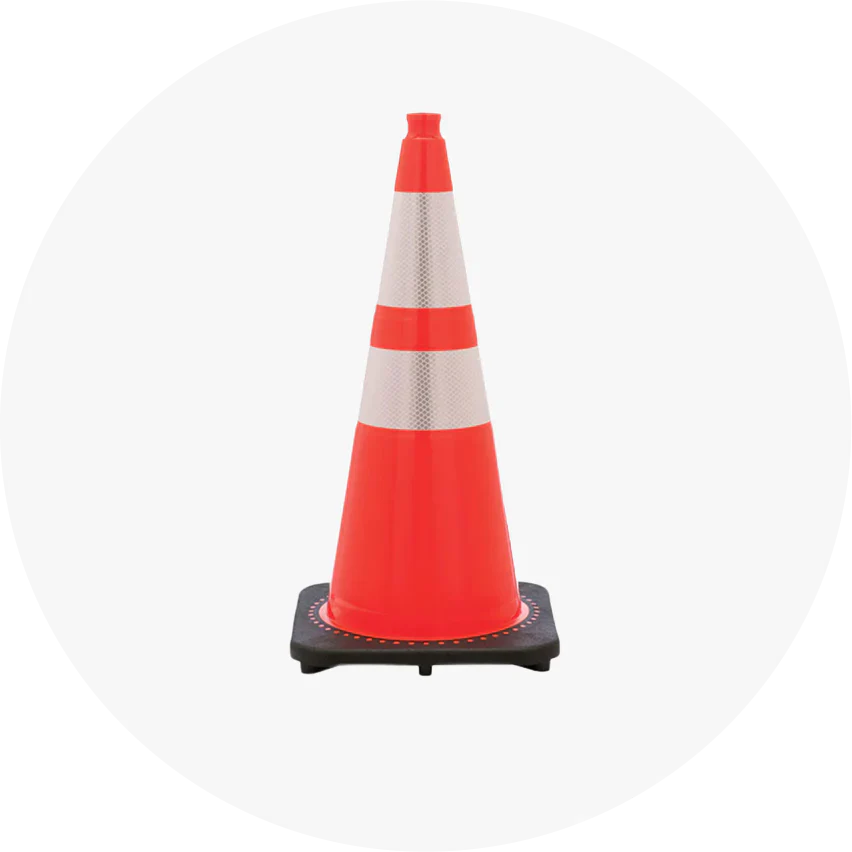
Standard traffic cones are fluorescent orange with reflective white collars.
Stability
Cones should remain upright in wind, traffic drafts, and outdoor conditions.
Durability
Professional-grade cones must withstand:
- UV exposure
- Weather conditions
- Frequent transport
- Repeated impacts
If you are sourcing cones for professional use, you can explore compliant options here
https://safetysuppliesusa.com/collections/traffic-cones
Reflective Traffic Cone Rules
Reflective collars are one of the most important compliance features.
For nighttime or low-visibility operations, cones generally must include retroreflective bands to ensure they remain visible under headlights.
Typical reflective requirements include:
- One reflective collar for smaller cones
- Two reflective collars for larger highway cones
Reflective traffic cones are especially important for:
- Night construction
- Emergency response
- Highway maintenance
- Low-light environments
Using non-reflective cones in these situations increases accident risk and may create compliance issues.
Traffic Cone Spacing Requirements
Proper spacing is just as important as the cones themselves.
Spacing depends on:
- Traffic speed
- Road type
- Work zone size
General Guidelines
Low-Speed Areas
Cones may be spaced 10 to 20 feet apart.
Moderate-Speed Roads
Spacing often increases to 20 to 30 feet.
High-Speed Highways
Cones may need to be spaced 40 feet or more apart for adequate warning distance.
Incorrect spacing can confuse drivers and reduce work zone effectiveness.
When Larger Traffic Cones Are Required
Not all cones are suitable for every environment.
18-Inch Cones
Typically used for:
- Parking lots
- Indoor use
- Light-duty applications
28-Inch Cones
Commonly required for:
- Construction zones
- Utility work
- Public roadway projects
36-Inch Cones
Often used for:
- High-speed highways
- Maximum visibility environments
- Night operations
Larger cones provide greater visibility and stability, especially in demanding conditions.
To compare sizes and options for different applications, you can browse available products here
https://safetysuppliesusa.com/collections/traffic-cones
Industries That Must Follow Traffic Cone Regulations
Several industries rely heavily on traffic cone compliance.
Construction
Cones create safer work zones around crews and equipment.
Event Management
Traffic cones help direct vehicles and manage pedestrian flow.
Municipal and Government Operations
Public works departments use cones for maintenance, repairs, and traffic control.
Emergency Services
Police, firefighters, and first responders rely on cones during emergencies and accident response.
Warehousing and Logistics
Cones can help separate vehicle traffic from pedestrian areas inside facilities.
Common OSHA Traffic Cone Violations
Some of the most common mistakes include:
Using Non-Reflective Cones at Night
This reduces visibility and increases risk.
Using Cones That Are Too Small
Smaller cones may not meet visibility expectations for higher-speed environments.
Poor Cone Placement
Improper spacing or positioning can confuse drivers.
Using Damaged or Faded Cones
Cracked or faded cones reduce visibility and professionalism.
Failing to Use Enough Cones
Insufficient warning zones can create unsafe conditions.
Avoiding these issues helps improve safety while reducing liability.
How to Choose OSHA-Compliant Traffic Cones
Choosing the right cone depends on your environment and risk level.
Consider Traffic Speed
Higher-speed areas require taller cones and greater visibility.
Evaluate Lighting Conditions
Night work requires reflective collars.
Think About Durability
Heavy-duty cones last longer and perform better outdoors.
Match the Cone to the Application
Different projects require different sizes and features.
Buy From Reliable Suppliers
Professional-grade equipment reduces replacement costs and improves compliance.
If you need cones for construction, event management, or municipal operations, you can explore reliable options here
https://safetysuppliesusa.com/collections/traffic-cones
Pair Traffic Cones with High-Visibility Safety Vests
Traffic control works best when cones are combined with high-visibility PPE.
Workers managing traffic or operating near roadways should always remain visible.
For complete safety setups, you can also explore high-visibility safety gear here
https://safetysuppliesusa.com/collections/safety-vests
Combining cones with ANSI-compliant safety vests improves safety, organization, and compliance across job sites.
Where to Buy Reliable Traffic Cones
Choosing the right supplier matters just as much as choosing the right product.
A trusted supplier should offer:
- Durable traffic cones
- Reflective options
- Multiple sizes
- Bulk ordering for teams and municipalities
You can explore professional-grade traffic cones and safety equipment at
Investing in reliable equipment helps improve work zone safety and long-term efficiency.
FAQ
Does OSHA require traffic cones?
OSHA requires employers to maintain safe work zones, and traffic cones are commonly used to meet those safety expectations.
What size traffic cone is required for roadwork?
28-inch cones are commonly used for roadwork, while 36-inch cones are often used for highways and high-speed areas.
Do traffic cones need reflective collars?
Yes, reflective collars are typically required for nighttime or low-visibility conditions.
What color are OSHA-compliant traffic cones?
Standard cones are fluorescent orange with reflective white bands.
How far apart should traffic cones be placed?
Spacing depends on traffic speed and work zone conditions, typically ranging from 10 to 40 feet or more.
Can damaged traffic cones still be used?
Damaged or faded cones should be replaced because they reduce visibility and effectiveness.
Creating safer work zones starts with using the right equipment. Browse durable, high-visibility traffic cones and safety gear at https://safetysuppliesusa.com and equip your team with products designed for real-world performance.