





Table of Contents
- What Are Traffic Cones Actually Called?
- What Are Traffic Cones Used For?
- Standard Traffic Cone Sizes and Their Uses
- What Are Traffic Cones Made Of?
- Are Traffic Cones Regulated by Law?
- Is It Illegal to Take or Move Traffic Cones?
- How Many Traffic Cones Do You Need?
- How to Choose the Right Traffic Cone
- Common Mistakes When Buying Traffic Cones
- Where to Buy High-Quality Traffic Cones
- FAQ
What Are Traffic Cones Actually Called?
Traffic cones are commonly referred to as:
- Safety cones
- Road cones
- Construction cones
- Highway cones
In formal standards and regulations, they are typically called traffic control devices. In some regions, people also use the term “pylons,” but in the United States, “traffic cones” is the most widely accepted term.
Understanding this terminology matters, especially when dealing with compliance, procurement, or government projects.
What Are Traffic Cones Used For?
Traffic cones are one of the most versatile safety tools used across industries.
Their primary purpose is to:
- Guide traffic
- Warn of hazards
- Create temporary boundaries
- Improve visibility in work zones
If you're planning for any of these applications, having the right equipment matters. You can explore available options here:
https://safetysuppliesusa.com/collections/traffic-cones
Common Use Cases
Road Construction
Cones are used to redirect vehicles, mark lane closures, and create safe work zones.
Event Management
They help organize parking, guide pedestrian flow, and control entry points.
Emergency Situations
First responders use cones to secure accident scenes and redirect traffic.
Warehouses and Industrial Sites
Cones can mark restricted areas, hazards, or temporary work zones.
Municipal Operations
City workers use cones for maintenance, repairs, and public safety management.
Because of their flexibility, traffic cones are essential for both temporary and semi-permanent safety setups.
Standard Traffic Cone Sizes and Their Uses
Traffic cones come in different sizes, and choosing the right one is critical for visibility and compliance.
12-Inch Cones
Best for:
- Indoor use
- Low-risk environments
- Parking garages
These are compact and easy to store but offer limited visibility.
18-Inch Cones
Best for:
- Small outdoor projects
- Event traffic control
- Light-duty applications
They provide moderate visibility without being too bulky.
28-Inch Cones
Best for:
- Road construction
- Highway work
- High-traffic environments
This is the most commonly used size for professional applications because it offers excellent visibility.
36-Inch Cones
Best for:
- High-speed roads
- Maximum visibility needs
- Night work zones
These cones are designed for extreme visibility and are often used in highway and DOT-regulated projects.
To match the right size to your project, it helps to review actual product options. Browse different cone sizes here:
https://safetysuppliesusa.com/collections/traffic-cones
What Are Traffic Cones Made Of?
Most traffic cones are made from PVC (polyvinyl chloride) or rubber.
PVC Cones
- Lightweight
- Flexible
- Resistant to weather conditions
- Easy to transport
Rubber Cones
- Heavier and more stable
- Better for windy conditions
- More durable in high-impact environments
Many high-quality cones also include:
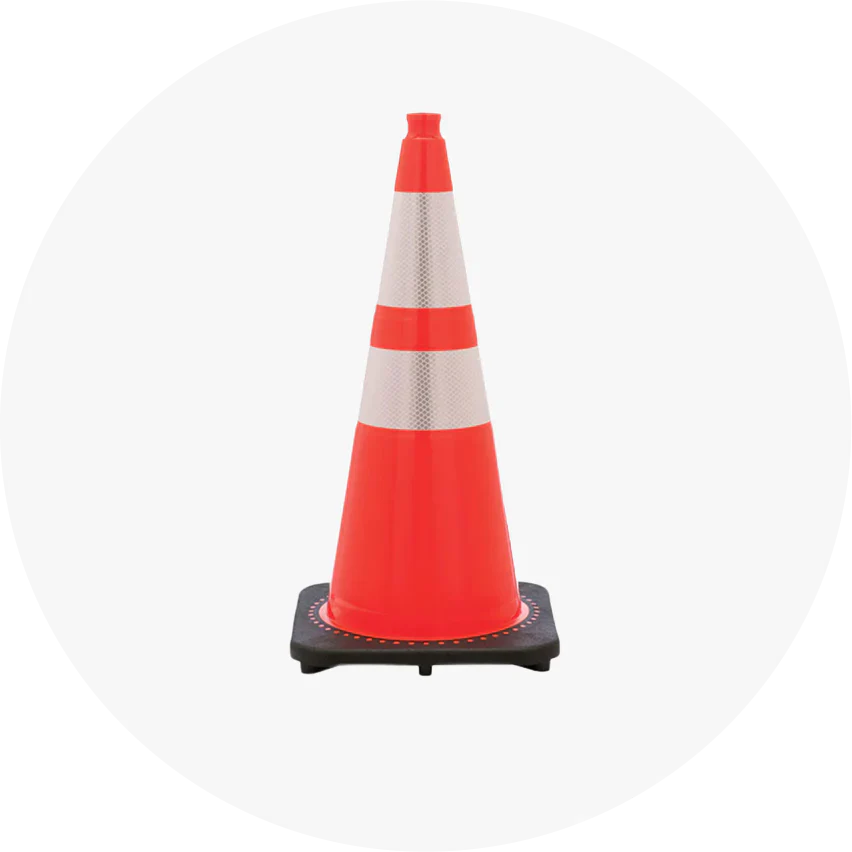
- Reflective collars for night visibility
- Weighted bases for stability
- UV-resistant materials for outdoor use
Choosing the right material depends on how and where the cones will be used.
Are Traffic Cones Regulated by Law?
Yes, traffic cones are regulated, especially when used on public roads.
In the United States, traffic control devices must follow guidelines set by the Manual on Uniform Traffic Control Devices (MUTCD).
These guidelines define:
- Cone height requirements
- Reflective strip placement
- Color standards (typically orange with reflective white bands)
For example:
- Cones used on highways must be highly visible and often require reflective collars
- Night use requires retroreflective materials
If you are working on public roads or government projects, compliance is mandatory.
Is It Illegal to Take or Move Traffic Cones?
Yes, in most cases, it is illegal.
Traffic cones are considered public safety equipment, and removing or moving them can:
- Create dangerous situations
- Disrupt traffic flow
- Lead to accidents
Depending on the state or municipality, taking traffic cones can result in:
- Fines
- Criminal charges
- Liability if an accident occurs
For businesses and organizations, this also highlights the importance of using durable, clearly marked cones to discourage theft.
How Many Traffic Cones Do You Need?
The number of cones required depends on the size and complexity of your setup.
General Guidelines
Small Work Areas
- 5 to 10 cones for marking boundaries
Parking and Event Control
- 10 to 30 cones depending on layout
Road Construction Zones
- Dozens to hundreds of cones depending on lane closures and traffic flow
Spacing is just as important as quantity.
Typical spacing recommendations:
- Low-speed areas: 10 to 20 feet apart
- High-speed roads: 20 to 40 feet apart or more
Using too few cones reduces effectiveness and increases risk.
How to Choose the Right Traffic Cone
Choosing the right traffic cone is not just about size. It’s about matching the cone to your environment.
1. Consider Traffic Speed
Higher speeds require taller cones with reflective collars.
2. Evaluate Visibility Conditions
Night work or poor weather requires reflective cones with high visibility.
3. Think About Stability
Windy areas or uneven surfaces may require heavier bases.
4. Check Compliance Requirements
For public road use, ensure cones meet MUTCD standards.
5. Plan for Storage and Transport
Stackable cones and lightweight materials can save time and effort.
Selecting the correct cone becomes easier when you can compare real options side by side. You can check available styles and specifications at
https://safetysuppliesusa.com/collections/traffic-cones
Quick Recommendation Guide
- Indoor or low-risk → 12-inch cones
- Events or light outdoor use → 18-inch cones
- Construction and roadwork → 28-inch cones
- Highways and night work → 36-inch cones
Common Mistakes When Buying Traffic Cones
Choosing the Wrong Size
Smaller cones may be cheaper but fail to provide adequate visibility.
Ignoring Reflectivity
Non-reflective cones are not suitable for night use or high-risk environments.
Buying Low-Quality Materials
Cheap cones crack, fade, or lose flexibility quickly.
Not Buying Enough
Underestimating quantity can compromise safety and efficiency.
Overlooking Compliance
Using non-compliant cones can result in fines and project delays.
Where to Buy High-Quality Traffic Cones
If you’re purchasing cones for professional use, quality and compliance matter.
At Safety Supplies USA, you can find:
- Durable, high-visibility traffic cones
- Multiple sizes for different applications
- Reflective options for night and highway use
- Bulk purchasing options for businesses and municipalities
Whether you’re managing a construction site, organizing an event, or handling municipal operations, investing in the right cones improves both safety and efficiency.
FAQ
What are traffic cones officially called?
They are commonly referred to as traffic control devices in official standards and regulations.
What size traffic cone is used on highways?
Typically, 28-inch or 36-inch cones are used for highway and high-speed environments.
Are reflective traffic cones required at night?
Yes, reflective collars are required for visibility in low-light and nighttime conditions.
Is it illegal to take a traffic cone?
Yes, removing traffic cones can result in fines or legal consequences since they are considered safety equipment.
What are traffic cones made of?
Most are made from PVC or rubber, designed for flexibility, durability, and weather resistance.
How far apart should traffic cones be placed?
Spacing depends on traffic speed, but typically ranges from 10 to 40 feet.
If you’re setting up a work zone, managing an event, or handling public safety operations, having the right equipment is critical.
Browse durable, high-visibility traffic cones at https://safetysuppliesusa.com/collections/traffic-cones and get the right setup for your needs.