
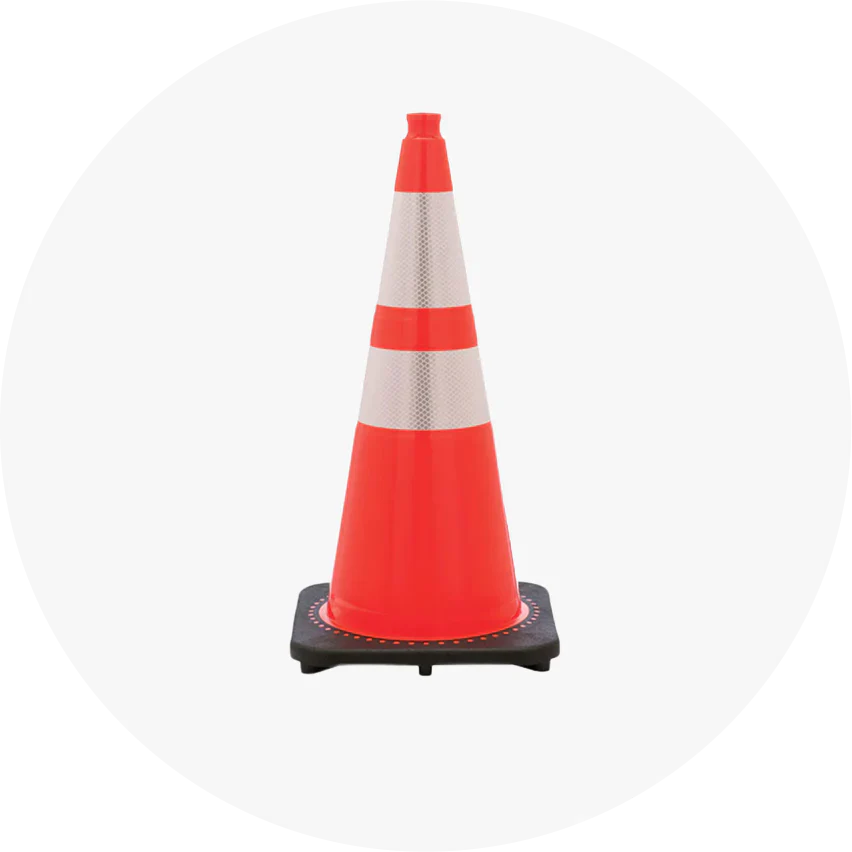






Asia is among the largest markets of traffic cones, though they have existed in various cities since their humble origins in the 1940s. It was during that time when these safety markers finally replaced the heavy wooden barriers, earning these traffic safety cones the title of being a global safety icon.
Right today, as rapid urbanization sweeps across Asia, the demand for these durable markers is skyrocketing. From bustling intersections in Tokyo to massive highway constructions in Dubai, Asia is now a primary driver of the global traffic cone market. But, how big, really, is the demand for traffic cones in Asia? Let’s embark on a trip in this Safety Supplies USA discussion.
Traffic Cones in the Busiest Cities in Asia
Movement in Asia’s busiest cities is hip, fast, and always changing, too, so to facilitate traffic in these bustling locations, the right traffic cones must be utilized. How in-demand are they?

Dubai, United Arab Emirates
Travel + Leisure describes Dubai in the United Arab Emirates “the sunniest holiday destination in the world.” Cars and motorists are everywhere.
“Dubai is known for its ultra-modern buildings, skyscrapers, the Burj Khalifa, the tallest building in the world, the Dubai Mall, the largest mall in the world, and its entertainment, restaurants, and attractions,” writes Travel + Leisure. “Beaches, indoor ski slopes, amusement parks, the indoor air-conditioned Dubai Dolphinarium, and observation decks on the Burj Khalifa are attractions for family visitors. Opulent hotels and resorts include the Burj Al Arab Jumeirah, built on an artificial island with a helipad, private beach, restaurants, and spa.”
While Dubai’s soaring skyscrapers and luxury attractions define its global image, the city’s constant state of transformation requires a massive, coordinated safety infrastructure. This relentless expansion keeps traffic cones in perpetual use, serving as vital orange sentinels that navigate every visitor through ever-shifting construction zones.
Traffic cones in Dubai are essential, highly regulated safety devices used to manage traffic flow, cordon off construction sites, and mark restricted zones. They are heavily utilized for lane closures, event management, and emergency, featuring reflective UV-resistant materials designed to withstand extreme heat and sun. Basically how traffic cones also work in other cities worldwide.
Specifically, traffic cones are being deployed during events, such as the Dubai Shopping Festival, held during the holiday season, to organize parking, define pedestrian walkways, and secure VIP or emergency access points.
They are also used for:
-
Road construction and maintenance
-
Traffic management
-
Event management
-
Safety and security zones
-
Illegal parking prevention
In Dubai, just like the traffic cones offered on the Safety Supplies USA catalog, regulations and standards must be followed:
-
The UAE follows a regulatory framework primarily based on British Standard BS EN 13422, with specific adaptations for local conditions.
-
Dubai’s Roads and Transport Authority (RTA) and Abu Dhabi’s Integrated Transport Centre (ITC) have implemented traffic detour executive regulations that require proper traffic cone deployment for all construction and maintenance activities.
-
Traffic cones there must also adhere to height requirements, from 300mm cones for commercial and private properties, to 1000mm cones for expressways. Biri Group AE, Traffic Cone UAE, and Disha Impex are some of the leading traffic cone suppliers in Dubai.

Hong Kong, China
The South China Morning Post, the number one newspaper in Hong Kong, indicated that there will be over 50 million visitors to tour this Chinese city in 2026, coming not just from nearby areas, but elsewhere. China, which features a land area of almost 10 million square kilometers, has several bustling cities, but Hong Kong is one of the most interesting.
Hong Kong attracts tourists to the gorgeous views from Victoria Peak, accessible via trams, and the views from the Star Ferry that sails between Hong Kong Island and the Kowloon Peninsula, treating visitors to beautiful skyline vistas, day and night.
It is also a hot destination for shopping, filled with shops, from upscale designer boutiques to street markets selling various specialties, products, and souvenirs. On nearby Lantau Island, visitors find Hong Kong Disneyland, beaches, amusement parks, and some hiking trails.
In Hong Kong’s densely packed urban corridors, traffic cones are indispensable tools for managing the intricate dance between constant utility repairs and heavy pedestrian flow. These high-visibility markers serve as the frontline of safety in a vertical city where every square inch of road space must be precision-managed to prevent gridlock.
Traffic cones in Hong Kong are used for standard road management, construction, and, notably during the 2019 protests, as a tool to neutralize tear gas canisters by capping them and dousing them with water. They are also used to mark slippery surfaces, close off areas, and direct pedestrian traffic.
These traffic safety cones in Hong Kong are also used for:
-
Protest action
-
Traffic management
-
General safety
Some of the leading suppliers of traffic cones in Hong Kong and the surrounding areas are:
-
HKTDC Sourcing
-
RS
-
Hangzhou Safer Traffic Facilities Co., Ltd.
-
Zhejiang Jiachen Technology Co., Ltd.
-
Beijing Roadsafe Technology Co., Ltd.

Seoul, Korea
The capital of K-pop and luxurious skincare won’t be experienced in their glory when roads are disorderly. Seoul has been named “the coziest city in Asia,” where you can enjoy ancient palaces, cutting-edge fashion, tasty street food, and K-culture.
In Seoul, traffic cones act as indispensable visual anchors within one of the world’s most advanced "Smart Cities," supporting a massive Intelligent Transport System (ITS) that monitors over 32 million daily trips. These orange guardians are frequently deployed to manage the city's aggressive schedule of "Clean Construction" public works and to safeguard the "Safe Speed 5030" pedestrian zones. As the city balances high-speed expressways with a surge in two-wheeled delivery traffic, the humble cone remains a primary tool for maintaining order and preventing bottlenecks in this cozy city in Asia.
In Korea, they are used for:
-
Safety and traffic management
-
Visibility
-
Versatility
In fact, traffic cones are part of “the firsts and bests” of government innovation in this East Asian country. Shindosafety, tradeKorea, and T-Safety are some of the leading traffic cone suppliers in South Korea.

Bangkok, Thailand
Another bustling city in Asia that deserves the spotlight for how heavily they use traffic cones in Bangkok in Thailand.
“Bangkok is a modern, bustling city with gorgeous temples, plush resorts on the Chao Phraya River, and a maze of canals where residents live and work. Shrines, temples, the Reclining Buddha, modern shopping malls, night markets, museums, and parks provide much to see. The magnificent buildings, murals, monuments, and statues in the Grand Palace compound, formerly the home of the Thai Royal family, should be on every visitor’s list,” the travel magazine indicates.
In Bangkok, these traffic cones for road safety are essential for guiding the city’s vibrant mix of tuk-tuks and taxis through a landscape of constant transit expansion and heavy monsoon drainage works. These durable markers provide a crucial layer of organization amidst the high-energy flow of the Thai capital, ensuring safety in one of the world's most dynamic traffic environments.
Some of the best uses of traffic cones in Bangkok include:
-
Traffic management
-
Parking management
-
Safety and security
-
“Holy” cones
-
Durability
For instance, every New Year’s Eve, traffic cones are installed to guide traffic to Bangkok’s shopping malls where New Year concerts are being held. Some of Thailand’s biggest suppliers of traffic cones are SCGC, Siam Traffic, and OfficeMate.

Tokyo, Japan
Lastly, Tokyo, Japan. Tokyo represents a unique study in urban order, where the traffic cone has transcended its standard safety role to become an omnipresent fixture of the city's precise, high-functioning environment.
Tokyo is a mesmerizing blend of the hyper-modern and the deeply traditional, where neon-lit skyscrapers sit comfortably alongside serene, centuries-old shrines. From the world’s busiest scramble crossing in Shibuya to the tranquil gardens of the Imperial Palace, the city is a testament to meticulous planning and harmonious living. Whether you are navigating the high-speed transit networks, exploring the vibrant culinary scenes of Shinjuku, or seeking refuge in quiet neighborhood temples, Tokyo offers an unparalleled experience of organized, relentless energy.
In Tokyo, traffic cones are ubiquitous tools of urban management, used to guide commuters, protect delicate historical sites from foot traffic, and maintain order in a densely packed metropolis. Beyond standard construction use, they act as visual anchors in parking facilities, act as safety barriers during the iconic cherry blossom season, and even serve as quirky, artistic expressions of public safety awareness. In the world’s most populous city, these orange sentinels are vital partners in ensuring that millions of daily movements remain fluid, safe, and respectful of the surrounding urban fabric.
Some notable uses of traffic cones in Tokyo include:
-
Pedestrian and crowd control
-
Cultural and historical protection
-
Parking precision
-
Seasonal safety
-
Urban still-life
You might see them perfectly aligned to guide tourists toward sacred temple entrances or meticulously placed to protect infrastructure near busy train tracks. While there are many local suppliers of safety equipment, the sheer scale of their use in Tokyo often feels like an art form in its own right.
The leading traffic cone suppliers in Japan are:
-
Hoandoro
-
Jackwin Industrial Co., Ltd.
-
Trusco Nakayama
Asia as the Inspiration: A Safety Supplies USA Discussion
Asia serves as a masterclass for Safety Supplies USA and its consumers, demonstrating how traffic cones manage extreme density with precision. From Tokyo’s hyper-organized crossings to Dubai’s high-tech transit zones, these regions prove that high-quality, reflective markers are indispensable. Their efficient deployment offers a blueprint for balancing rapid urban growth with unwavering public safety.
Conclusion
So, how in-demand are traffic cones in Asia? As Asia’s urban landscapes evolve, these versatile traffic cone remains a vital, high-demand pillar of public safety. From Tokyo’s precision to Bangkok’s bustle, these orange sentinels keep the continent moving. Shop your traffic cones today at www.safetysuppliesusa.com.