
 ConesBulk pricing
 Hard HatsAdd your logo
 Hi-VisAdd your logo


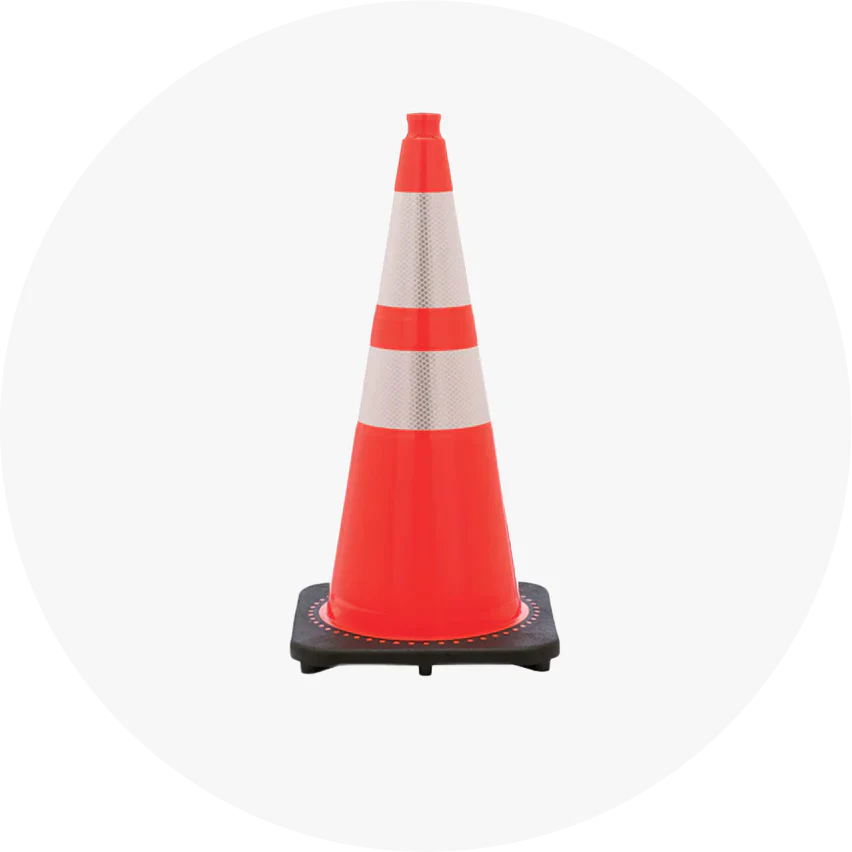





Bulk traffic cones are commonly sold in pallet quantities of 100, 200, 360, or 720 units, depending on the supplier and cone specifications. The total cost depends on cone height, base weight, reflective markings, quantity, and freight requirements.
Most large traffic cone orders travel by less-than-truckload (LTL) freight. Commercial delivery arrangements can differ from residential deliveries or jobsites without unloading equipment.
A lower advertised pallet price does not necessarily mean a lower delivered cost. Buyers must compare equivalent cones, calculate the unit price, and account for applicable freight services.
This guide explains pallet quantities, bulk traffic cone pricing, freight charges, receiving procedures, and how to estimate the number of cones needed for a project.
Bulk Traffic Cones at a Glance
Bulk traffic cone ordering requires three decisions: choosing the correct cone specification, selecting a purchasing quantity, and confirming the receiving location.
|
Ordering factor |
What to check |
|
Pallet quantities |
100, 200, 360, or 720 cones |
|
Common commercial size |
28-inch cones |
|
Base configurations |
5.5 lb, 7 lb, or other specified weights |
|
Reflective markings |
Reflective or non-reflective |
|
Freight method |
LTL freight for many pallet orders |
|
Receiving location |
Commercial dock, jobsite, or residential |
|
Cost comparison |
Price per cone plus applicable delivery charges |
For examples of different pallet quantities and cone configurations, the Bulk Traffic cones collection lists several purchasing options.
How Many Traffic Cones Are on a Pallet?
A pallet of traffic cones does not have one standardized quantity. The number depends on cone height, base dimensions, overall weight, and stacking configuration.
A 28-inch cone with a heavy rubber base occupies more shipping weight than a lighter model.
Some suppliers offer full pallets containing several hundred cones, while others provide smaller pallet quantities.
|
Order configuration |
Typical interpretation |
|
100 cones |
One smaller bulk shipment |
|
200 cones |
One pallet configuration |
|
360 cones |
High-density pallet configuration |
|
720 cones |
Two pallets of 360 cones |
These configurations are examples from the Safety Supplies USA catalog, not universal industry pallet capacities.
Why Do Pallet Counts Vary?
Traffic cones nest together, but their bases affect the height and stability of the resulting stacks.
Different base footprints, body designs, and pallet-height restrictions can change the number of cones safely transported.
Carriers also consider total weight and freight dimensions.
Before ordering, confirm the actual pallet count, shipping weight, and dimensions rather than assuming every supplier uses the same configuration.
How Much Does a Pallet of Traffic Cones Cost?
Bulk traffic cone prices vary according to the model, material, base weight, reflective sheeting, and order quantity.
The following publicly listed examples illustrate why buyers should compare complete specifications.
Example prices: Safety Supplies USA, October 2026
|
Product configuration |
Quantity |
Listed total |
Price per cone |
|
28-inch orange, 7 lb base, dual reflective collars |
100 |
$1,349.00 |
$13.49 |
|
Same reflective configuration |
200 |
$2,498.00 |
$12.49 |
|
Same reflective configuration |
360 |
$4,676.40 |
$12.99 |
|
Same reflective configuration |
720 |
$8,272.80 |
$11.49 |
Prices are dated examples and may change. The 360-cone listing does not follow a continuously decreasing unit-price pattern, so the selected variant and current quotation should be checked before purchase.
Why Do Similar Cones Have Different Prices?
A reflective cone includes additional materials and manufacturing steps compared with an otherwise similar non-reflective model.
Base weight, body material, model design, and customization can also affect cost.
A lighter cone may cost more than a heavier design because of different manufacturing or commercial pricing arrangements.
Therefore, weight alone should not be used to predict price.
How Do You Calculate the Total Delivered Cost?
The total delivered cost includes the merchandise price and any additional freight services or applicable charges.
Use:
Total delivered cost = Product cost + Applicable freight charges + Other applicable costs
For example, 100 cones priced at $13.49 each produce a merchandise cost of $1,349.
If that shipment qualifies for an advertised commercial freight offer and no additional charges apply, the merchandise and freight subtotal remains $1,349.
If the destination requires a chargeable liftgate or other service, the subtotal increases.
For comparison, 720 cones at the listed $11.49 unit price total $8,272.80.
These examples exclude any separately applicable taxes or charges.
Always confirm the delivered quotation rather than assuming promotional freight covers every destination.
How Does Freight Shipping Work for Bulk Traffic Cones?
Large traffic cone orders commonly ship using LTL freight.
LTL allows multiple customers' palletized shipments to share space in one trailer.
The freight carrier may calculate charges using shipment dimensions, weight, density, freight classification, origin, destination, and required services.
What Freight Services Can Affect Delivery Cost?
|
Freight service |
When it may be required |
|
Liftgate |
No suitable dock or unloading equipment |
|
Residential delivery |
Destination classified as residential |
|
Limited-access delivery |
Restricted jobsites or secured facilities |
|
Delivery appointment |
Scheduled receiving arrangements |
|
Inside delivery |
Movement beyond standard delivery position |
These services are not automatically included in every freight quotation.
For example, a product listing may advertise free commercial LTL freight while applying an additional charge to certain residential or liftgate deliveries.
A pallet jack generally moves a pallet at ground level. It does not independently unload a pallet from an elevated trailer without suitable equipment.
What Information Should You Provide Before Ordering?
Accurate shipping information helps suppliers select the appropriate freight arrangement.
Before requesting a quote, prepare:
-
Delivery address and destination type.
-
Whether a loading dock or forklift is available.
-
On-site receiving contact.
-
Access restrictions, gates, or security procedures.
-
Required cone height, color, and base weight.
-
Reflective collar specifications.
-
Total quantity and any customization requirements.
-
Purchase order (PO) reference, if applicable.
Confirm any additional freight services before finalizing the order.
How Should You Inspect a Traffic Cone Pallet on Arrival?
Inspect the shipment before accepting it without notation.
Start by comparing the delivery receipt with the number of pallets received.
Check the exterior wrapping, pallet structure, and visible products for damage.
Look for cracked cone bodies, broken bases, and damaged reflective collars.
If damage is visible, document it on the delivery receipt and take photographs.
Follow the seller's freight-claim procedures and reporting deadlines, which should be confirmed before delivery.
How Many Traffic Cones Should You Order?
The correct quantity depends on the number of active work zones, cone spacing, equipment rotation, and anticipated replacement needs.
For roadway projects, the approved temporary traffic control plan determines the required device placement.
As a planning example, consider a company operating four crews that each require 25 cones.
The simultaneous requirement is:
4 crews × 25 cones = 100 cones
If equipment will be shared between crews, the inventory calculation may change.
Additional cones may be needed for damage, theft, maintenance, and unexpected deployments.
Do not multiply daily usage by project duration unless cones are consumed, lost, or committed to separate locations.
Which Cone Specifications Matter Most in Bulk Orders?
Confirm cone specifications before comparing pallet prices.
For highway applications, the Federal Highway Administration's Manual on Uniform Traffic Control Devices (MUTCD) establishes minimum height and visibility requirements.
Section 6K.03 specifies 28-inch minimum cones for freeways, other high-speed highways, and nighttime highway operations.
Nighttime roadway cones must also be retroreflectorized or equipped with lighting devices.
For 28–36-inch cones with retroreflective bands, the specified pattern includes one 6-inch white band and one 4-inch white band.
Base weight is not governed by one universal federal minimum.
For additional guidance about selecting cone heights, materials, and reflective configurations, read the Traffic Cone Buying Guide.
How Should Bulk Traffic Cones Be Stored?
Store nested traffic cones on stable surfaces away from active vehicle routes.
Avoid stacking higher than the manufacturer's recommended limit.
Inspect reflective collars for abrasion and keep cones clean enough for their markings to remain visible.
Rotate older inventory into service and periodically check bases for separation, cracks, or distortion.
For outdoor storage, consider weather exposure and the manufacturer's material recommendations.
Is It Better to Rent or Buy Traffic Cones?
Renting can be practical for one-time projects when equipment, transport, and retrieval are included in the arrangement.
Buying may be preferable for organizations that repeatedly deploy cones and have suitable storage.
Compare rental fees with purchase cost, expected usage, equipment maintenance, and transportation requirements.
Frequently Asked Questions
How many traffic cones fit on one pallet?
Pallet quantities vary by supplier and cone design. Common bulk configurations include 100, 200, and 360 cones on a pallet, while a 720-cone order may use two pallets.
How much does a pallet of traffic cones cost?
The cost depends on quantity, cone specifications, and current pricing. Compare the cost per cone and total delivered price rather than the pallet price alone.
Is shipping free on bulk traffic cone orders?
Some suppliers advertise free commercial LTL freight for qualifying orders. Residential delivery, liftgate services, or restricted-access destinations may carry additional charges.
What if the delivery location has no loading dock?
Confirm whether a suitable forklift is available or whether liftgate service can be arranged. The carrier's unloading requirements should be established before delivery.
Can traffic cones be delivered directly to a jobsite?
Jobsite delivery may be available, depending on carrier access and the destination. Construction sites can require special delivery arrangements or additional charges.
How much does a pallet of traffic cones weigh?
Pallet weight depends on the cone count, individual cone weight, packaging, and pallet structure. Request the verified gross shipping weight for the selected configuration.
Can different cone sizes or colors be mixed on one pallet?
Mixed pallet availability depends on the supplier and fulfillment arrangement. Confirm whether mixed configurations are offered and whether they change pallet quantities or pricing.
Can bulk traffic cones be customized with a company name?
Some suppliers provide cone identification or stenciling services. Confirm the minimum order quantity, placement, artwork requirements, and applicable charges before ordering.
Conclusion
Bulk traffic cone purchasing requires accurate quantity planning, consistent product specifications, and a clear understanding of freight conditions.
Compare the price per cone, verify the complete pallet configuration, and confirm how the shipment will be unloaded.
A properly planned order accounts for both the traffic control equipment needed and the practical requirements of receiving and maintaining it.